

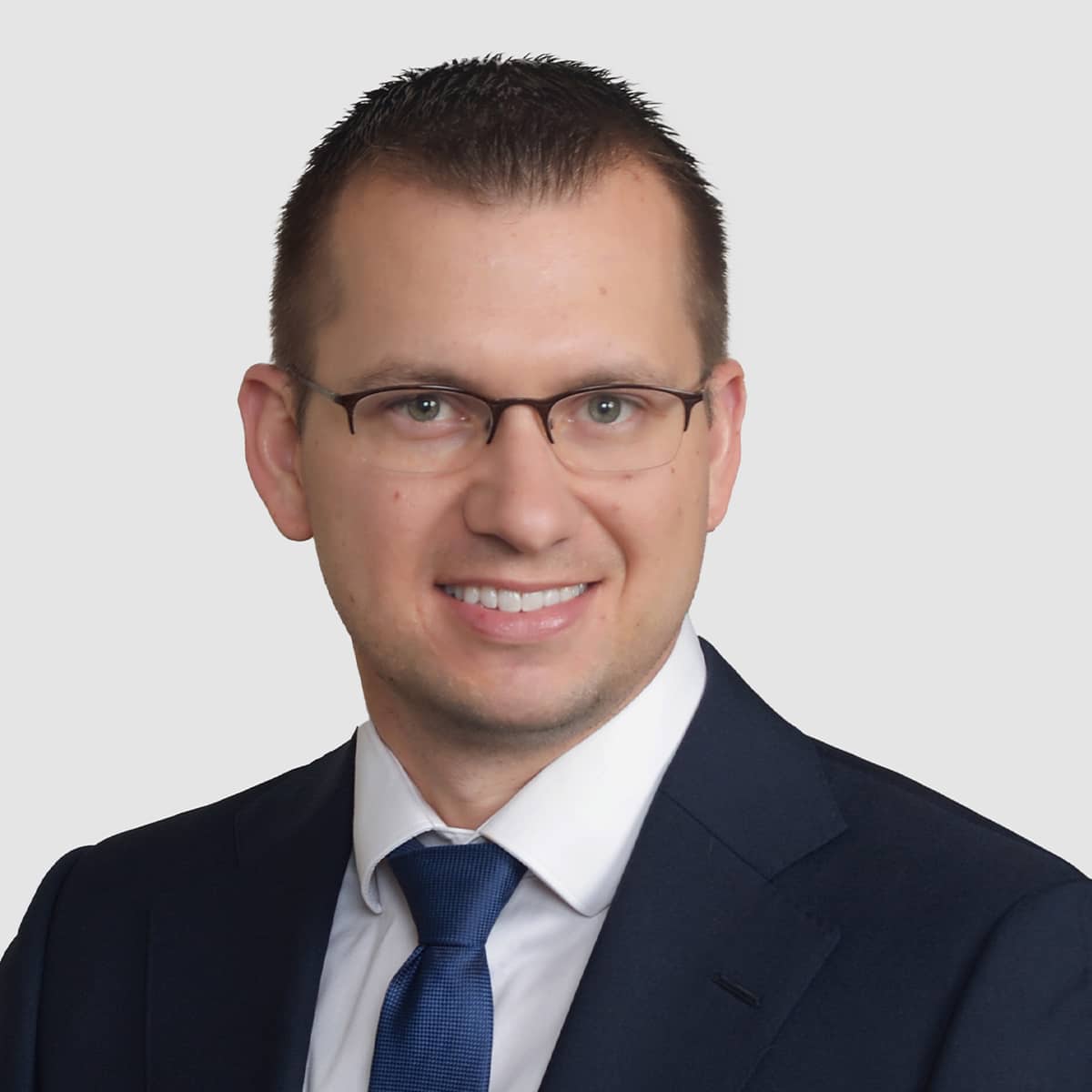
Christian R. Sax, P.E., PTOE, ACTAR
Transportation Practice Leader
SERVICES GROUP
LOCATION
Get to know the expert
Expert QuestionS & AnswerS
Traffic signal collisions — what unique evidence and challenges do they present?
One of the most valuable aspects of a signalized intersection investigation is the amount of objective data that may be available. Signal timing records, controller logs, video footage, and crash evidence can often be used to reconstruct events in detail. The challenge is ensuring those data sources are interpreted correctly and considered within the broader context of the collision.
Having testified as an expert witness, what’s the most challenging aspect of presenting transportation findings in a way that resonates with judges and juries?
One lesson I’ve learned from testifying is that the best expert testimony is often the simplest. My goal is to take complex transportation and collision reconstruction concepts and explain them in plain language. When judges and juries understand the evidence and the process behind the analysis, they are better equipped to evaluate the facts.
What challenges are unique to investigating crashes in highway work zones?
Unlike a permanent roadway, a work zone is temporary and constantly evolving. Signs, pavement markings, lane shifts, and barriers may change throughout a project. The challenge is determining whether the temporary traffic control was appropriate for the conditions and whether it was implemented as intended at the time of the crash.
Background
Mr. Christian Sax holds B.S. and M.S. degrees in Civil Engineering, with an emphasis in Transportation Engineering from Iowa State University. Mr. Sax is a licensed professional engineer, a Professional Traffic Operations Engineer, and an accredited traffic accident reconstructionist by the Accreditation Commission for Traffic Accident Reconstructionists (ACTAR). He also holds a certification as a Crash Data Retrieval Analyst.
Mr. Sax’s professional practice is focused on forensic engineering and collision reconstruction in cases involving roadways, traffic control devices, vehicular collisions, transportation safety, and traffic operation issues. His areas of expertise include vehicle collision reconstruction, highway work zone traffic control, roadway design, traffic signal operations, and traffic control devices.
He has performed collision reconstruction and engineering analyses on hundreds of cases involving work zone and traffic control-related issues, commercial tractor/trailers, passenger vehicles, pedestrian accidents, bicycle and motorcycle collisions, and rollovers, and has testified as an expert witness at deposition and trial settings.
Education and Certifications
- Civil Engineering, B.S.: Iowa State University (2007)
- Civil Engineering, M.S.: Iowa State University (2008)
- Registered Professional Engineer: Arizona, Colorado, Florida, Illinois, Louisiana, New Mexico, Nevada, Michigan, Missouri, and Texas
- Professional Traffic Operation Engineer: Transportation Professional Certification Board, Inc.
- Accredited Accident Reconstructionist: The Accreditation Commission for Traffic Accident Reconstruction
- Certified Crash Data Retrieval (CDR) Technician and Analyst
- Memberships: Institute of Transportation Engineers, Society of Automotive Engineers
Publications
- “Determining Liability in Collisions at Signalized Intersections.” Michigan Defense Quarterly Volume 34, No. 3, 2018.
- “Analysis of SIMON / DYMESH Simulations for Underride Collisions.” 2016 HVE Forum WP# 2016-2, 2016.
- “Video Analysis and Analytical Modeling of Actual Vehicle/Pedestrian Collisions.” Society of Automotive Engineers Technical Paper 2014-01-0483, 2014.
- “Comparison of Computer Simulations and Reconstruction Methodologies for Motorcycle Accidents.” 22nd Annual Congress of the European Association of Accident Research and Analysis, Paper 2013-07, Oct. 2013.
- “Bicycle Tire Friction Coefficient Variance in Wet and Dry Conditions Across Multiple Surface Pavement Types.” 22nd Annual Congress of the European Association of Accident Research and Analysis, Paper 2013-07, Oct. 2013.
- “Optimum Urban Clear Zone Distance.” Transportation Research Record 2195, 2011.
- “The Safety Benefit Added by Lateral Roadside Clearance to Urban Streets.” International Conference on Urban Transport and the Environment, Bologna, Italy, June 2009.
- “Clear Zone – A Synthesis of Practice and an Evaluation of the Benefits of Meeting the 10 ft Clear Zone Goal on Urban Streets.” Master’s Thesis, 2008.
- “Clear Zone – A Synthesis of Practice and an Evaluation of the Benefits of Meeting the 10 ft Clear Zone Goal on Urban Streets.” Midwest Transportation Consortium (MTC) Compendium of Student Papers, Ames, IA. November 2008.
- “Clear Zone – A Synthesis of Practice and an Evaluation of the Benefits of Meeting the 10 ft ClearZone Goal on Urban Streets.” Iowa Highway Research Board (IHRB Project TR-560), Ames, IA, Nov. 2008.
- “Local Roads Maintenance Worker’s Manual.” Iowa Highway Research Board (IHRB Project TR-514), Ames, IA, June 2006.
Contact Information
Testimony Experience
- Depositions
- Trials