

Case Study Overview
How a comprehensive Developer Transition Study and Capital Reserve Study helped a community association protect its assets, uncover hidden defects, and plan for a secure financial future
|
SERVICE LINES |
SECTOR |
LOCATION |
ENGAGEMENT LEAD |
|---|---|---|---|
|
Transition Study Reserve Study |
HOA / Community Association |
Southwest Florida |
Rimkus BES |
|
12+ |
40-YEAR |
60 DAYS |
PE-CERTIFIED |
|---|---|---|---|
|
Facilities Assessed |
Reserve Horizon |
Draft to Final |
Deliverable |
The Challenge: Taking Ownership of a Complex Property
Transitioning a large, amenity-rich community from developer control to homeowner-governed management is one of the most substantial moments in a community association’s lifecycle. The stakes are high: undiscovered construction defects, underfunded reserves, and incomplete documentation can translate into significant financial liability for homeowners, sometimes for years or decades after the keys change hands.
A Florida country club homeowners association, managing a property that includes a clubhouse, cart barn, multiple food and beverage outlets, resort-style pools, a golf maintenance facility, guardhouse, extensive irrigation infrastructure, roads, and parking areas, found itself at exactly that crossroads. The association needed both a rigorous construction assessment aligned with Florida’s statutory process for defect claims, and a forward-looking financial reserve analysis to ensure the community could afford to maintain and repair its assets over time.
“The transition from developer to owner control is a one-time window. Miss it, and the community bears the cost of defects it never had the chance to document.” – Craig M. Dudas, RS, Rimkus Senior Practice Leader, Construction Advisory
The association needed a partner with multidisciplinary in-house expertise: structural engineers, building envelope specialists, mechanical, electrical, plumbing (MEP) consultants, and certified reserve specialists, all working under one roof and operating on an accelerated timeline.
The Solution: A Dual-Track Assessment Built for Decision-Making
The Rimkus Built Environment Solutions (BES) team was engaged to deliver two interconnected workstreams simultaneously, a Developer Transition Study and a Full Capital Reserve Study, providing the association with a complete picture of both its current physical condition and its long-term funding requirements.
The engagement was structured to comply with Florida’s construction defect notification process and to meet Community Associations Institute (CAI) standards for reserve studies, ensuring findings were both legally actionable and financially defensible.
|
Developer Transition Study |
Capital Reserve Study |
|
Visual, nondestructive assessment of all common elements to identify construction defects: defective materials, code violations, specification and drawing noncompliance, and failures to meet professional standards of care. |
Full component inventory, life and valuation estimates, 40-year replacement schedule, and two fully funded cash-flow scenarios to guide long-term financial planning. Certified by a Reserve Specialist. |
|
Multi-Facility Coverage |
PE-Certified Deliverable |
|
Clubhouse, Cart Barn, Bunker Bar, Pool Restroom, Guardhouse, Maintenance Shed, Irrigation Pump House, Golf Course facilities, roads, cart paths, pool and spa, irrigation systems, vehicle gates, and signage. |
Final report certified by a registered Florida Professional Engineer, including photographic documentation, defect criteria, documentation review, and a full exhibit set. |
How We Worked: Integrated Expertise, Structured Execution
The Rimkus BES team assembled a project specific group that included a CAI-certified Reserve Specialist with over 20 years of inspection experience, licensed civil and structural engineers, building envelope specialists, and project managers with deep Florida construction administration backgrounds. This integrated team eliminated the coordination delays and information gaps that arise when multiple vendors work independently.
The assessment methodology was deliberately rigorous yet practical. All observations were visual and nondestructive, ensuring access to all areas without disruption to community operations, while focusing specifically on the defect categories most material to a developer transition claim: noncompliant materials, code deviations, specification violations, and departures from accepted trade standards.
What the Assessment Covered
- Roofing systems (structure, soffits, gutters) across all common buildings
- Exterior envelopes: siding, windows, doors, sealants, and finishes
- MEP systems (HVAC, plumbing, electrical, fire protection) across all facilities
- Pool and spa shell, equipment, decking, coping, fencing, and drainage
- Pavement infrastructure: roads, parking areas, sidewalks, curbing, bike/cart paths
- Irrigation systems across both common areas and the golf course
- Golf course fixed assets: Maintenance Shed, Pump House, on-course restrooms, cart trails
- Reserve-specific components: cooking equipment, refrigeration, furniture finishes, landscaping
For the Capital Reserve Study, the team developed a 40-year replacement and repair schedule for every inventoried component, incorporating Estimated Useful Life, Remaining Useful Life, Estimated Replacement Costs, and 40-year Estimated Replacement Costs. Two fully funded financial scenarios were modeled, a Cash-Flow method and a Component Funding method, giving the board clear, comparable options for structuring reserve contributions.
The Timeline: Moving Quickly Without Cutting Corners
Transition studies operate under time pressure, the association’s window to formally document and pursue defect claims under Florida law is not unlimited. Rimkus structured the engagement to move from site mobilization to a certified final report in under 90 days.
Week 1: Site Assessment
On-site survey of all common and golf course facilities. Visual, non-destructive observations across every component category, with photographic documentation and field notes captured systematically.
Weeks 2-10: Draft Report Development
Compilation of findings into a structured draft report: executive summary, component-level defect identification (what, where, and applicable criteria), photo exhibits, and documentation review.
Week 11: Draft Report Review
Report circulated to the association for review and comment. Rimkus incorporated feedback and finalized the analysis before professional certification.
Week 12: Final Report Delivery
PE and RS-certified final reports issued, covering both the Developer Transition Study findings and the complete Capital Reserve Study with 40-year financial modeling.
The Value Delivered: Risk Reduced, Decisions Empowered
The Rimkus BES engagement delivered value across three distinct dimensions: legal protection, financial clarity, and operational decision-making.
Legal and Liability Protection
The Developer Transition Study gave the association a professionally documented, PE-certified record of construction conditions at the moment of transition. This documentation is the foundation of any future defect claim under Florida’s Chapter 558 process. Without it, defects discovered years later are far harder to attribute to the developer, and far more expensive to remediate without recourse. By identifying defects early and systematically, the association preserved its legal standing and its ability to seek remediation from the responsible parties.
Financial Foresight
The Capital Reserve Study answered a question every HOA board must face: are we setting aside enough money? With a 40-year replacement schedule and two modeled funding scenarios, board members could compare the cost of adequate reserves against the consequences of underfunding: special assessments, deferred maintenance, or deteriorating property values. The study gave the board both the data and the tools to make defensible, transparent funding decisions for homeowners.
Operational Clarity
The asset inventory produced as part of the reserve study also functions as a living baseline: a documented record of what the association owns, its age, its estimated remaining life, and its replacement cost. This kind of asset register is essential for maintenance planning, insurance, and vendor procurement.
Why Choose Rimkus Built Environment Solutions?
Engagements like this demand more than a single inspector with a checklist. They require structural engineers who understand load paths and code compliance, building envelope specialists who can identify water intrusion pathways, MEP consultants who evaluate the adequacy of complex systems, and reserve specialists who can translate physical observations into defensible long-term financial projections, all working together, accountable to a single team lead, on a fixed timeline.
That integration is what Rimkus BES provides. With all disciplines in-house, no subcontracting of core scope, and a track record of more than 75 developer transition studies conducted over the past seven years, the team brought both technical depth and process efficiency that generalist firms cannot replicate.
For HOA boards, property managers, and association attorneys navigating developer transition, the question is not whether to conduct this type of assessment, it’s whether to do it comprehensively enough to matter. Rimkus BES is built to answer that question with confidence.
Key Takeaways for HOA Leaders and Property Managers
If your community association is approaching or undergoing developer turnover, keep the following principles in mind.
What Every Transitioning HOA Should Know
- Developer transition studies and capital reserve studies are most effective when conducted simultaneously, since they share site access and physical observations, compressing cost and time
- Florida’s Chapter 558 process requires formal notice and documentation of defects. A PE-certified transition study is the evidentiary cornerstone of any claim
- An underfunded reserve is a hidden liability on every homeowner’s balance sheet. A full reserve study, not a desktop update, provides the defensible analysis needed to set appropriate contribution levels
- Multidisciplinary in-house teams outperform fragmented vendor networks on both quality and accountability. Ask prospective consultants which services they subcontract and to whom
- Speed matters. The transition window closes. Engage a qualified firm before, not after, control transfers to the association
Meet Our Florida Expert: Craig M. Dudas, RS
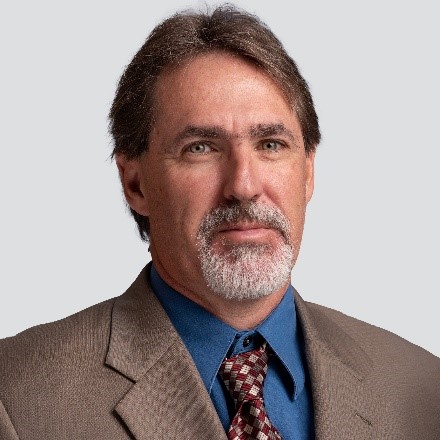
Senior Practice Leader, Construction Advisory
Built Environment Solutions, Florida
+1 813 521 5020
[email protected]
View Craig’s Expert Profile
Craig leads developer transition studies and capital reserve assessments for community associations across Florida, bringing decades of construction, engineering, and forensic expertise to HOA boards navigating turnover.
Connect with Craig directly or submit a request for consultation today!
This case study is intended to provide general information and insights into prevailing industry practices. It is not intended to constitute, and should not be relied upon as, legal, technical, or professional advice. The content does not replace consultation with a qualified expert or professional regarding the specific facts and circumstances of any particular matter.