

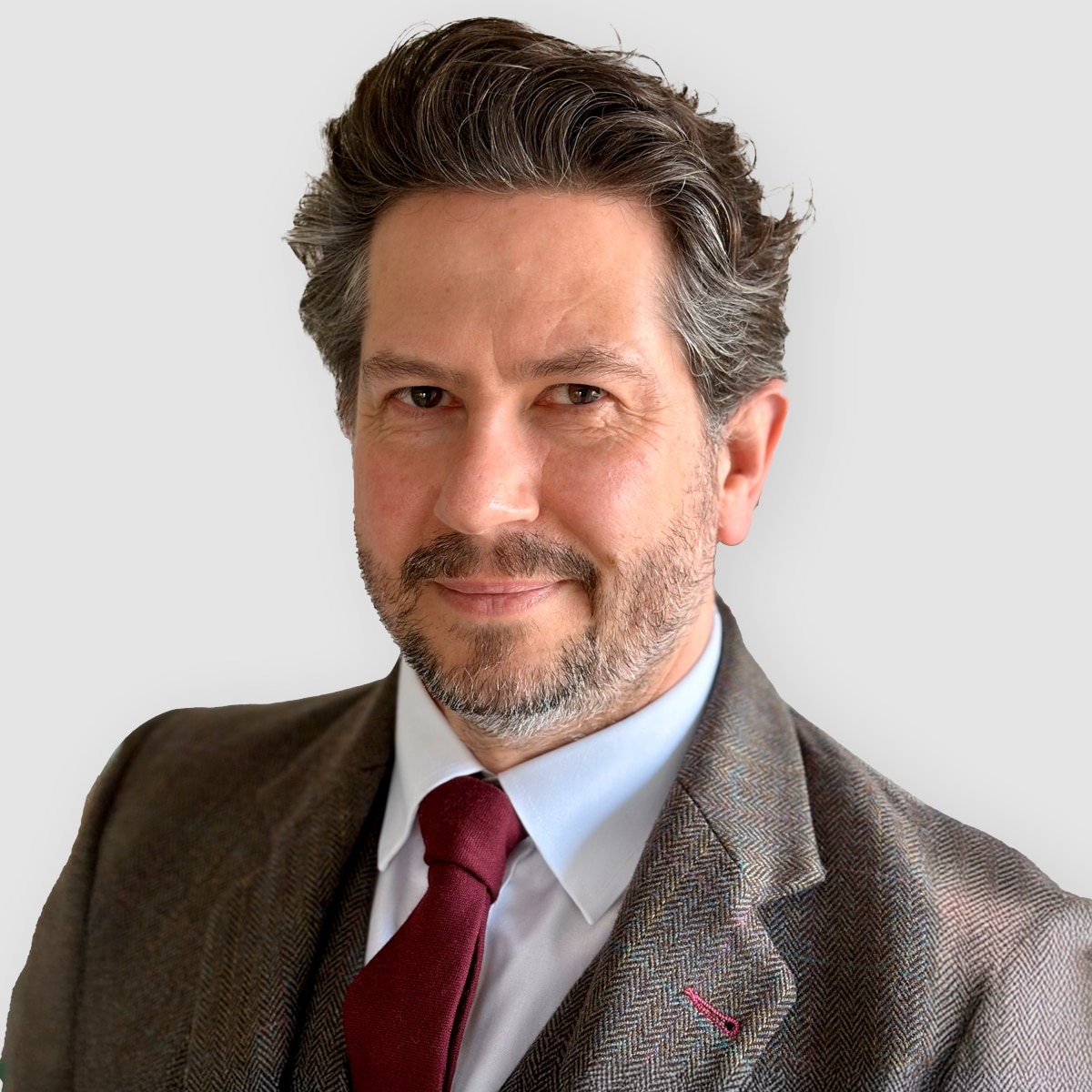
John Colquhoun, Eur Ing, CEng, BEng (Hons), MIET, AIFireE, MIAAI
Head of Forensic Services, EMEA
SERVICES GROUP
LOCATION
Get to know the expert
Expert QuestionS & AnswerS
Your experience spans power and energy projects across Europe. How do the dispute dynamics and evidentiary challenges differ in this sector compared to others you’ve worked in?
Power and energy disputes are often driven by a complex web of causation rather than the existence of a single defect. The key challenge is establishing a reliable sequence of events from large volumes of installation and commissioning documents, operational data, maintenance records, and existing root cause analysis. Multiple stakeholders with competing needs and commercial considerations also make an evidence-based analysis and opinion critical.
Your work spans telecommunications, power, and energy failures. How does the operating context change the way you investigate root cause?
The methodology remains the same, but the differences in operating drivers effects where the evidence sits and how causation is established and communicated. There is more in common than differences between these sectors, especially when there are multiple stakeholders and potential grey areas between contracts, and delivery drivers.
Your professional chartership reflects a depth of technical and ethical commitment. How do professional standards and codes of conduct influence the way you approach independent expert work in forensic engineering?
Professional standards underpin every aspect of my expert work. As a Chartered Engineer and Expert Witness, I am bound by principles of integrity, competence, impartiality, and accountability. They ensure my opinions are evidence-led, and reasoned. In forensic engineering, credibility depends on following the evidence, identifying any limitations, and ultimately presenting the facts and conclusions in a robust, impartial, concise and clear manner.
What is something about forensic engineering and accident investigations in energy or infrastructure matters that would surprise non-engineers?
Incidents, no matter how simple or complicated, rarely have a single cause. They are usually the outcome of a series of events that align in perfect unison for an incident to occur. These events can be technical, operational, or environmental, with the human interaction being the most complicated one of all. Constructing all of these variables into a chain of events may still leave an incomplete picture of the incident, that is where the forensic engineer earns their spurs.
What is one piece of advice you find yourself giving clients over and over again?
Evidence is lost or degrades as soon as an incident occurs. Therefore, a forensic investigator should be appointed as soon as possible following an event (even if its still burning). This not only ensures evidence is retained but there is preparation for all eventualities, including legal action.
Background
John is a Chartered Engineer and leading expert in forensic and accident investigations across the global telecommunications, power, and energy sectors, including generation, storage, and distribution. Renowned for his specialist knowledge in fire investigations, engineering failures, and personal injury analysis, John has consistently delivered critical forensic analyses to uncover root causes of failures spanning energy, infrastructure, workplace accidents, and digital technology. He is an expert in wind, hydro, solar, battery storage, and nuclear power generation incidents, providing comprehensive assessments of complex engineering challenges.
John has produced numerous CPR-compliant reports and presented expert evidence in high-profile legal proceedings, including the Royal Courts of Justice, Scottish Sheriff Courts, Fatal Accident Inquiries, and the Institute of Civil Engineering Arbitration. His experience extends to managing full project lifecycles, tower climbing, rescue operations, RF awareness, and the safe use of Mobile Elevating Work Platforms (MEWPs). GWO-certified and WINDA-registered for onshore and offshore wind turbine access, John is uniquely equipped to handle the demands of tall structure investigations.
With a background in electrical and electronic engineering, John is recognised as a Chartered Engineer by the UK Engineering Council and European Engineer by FEANI.
Education and Certifications
- Electrical and Electronic Engineering, BEng (Hons): University of Paisley (1997)
- Chartered Engineer (CEng): Engineering Council, UK (2005)
- European Engineer (EUR ING): FEANI
Associations and Memberships
- Member: Institute of Engineering and Technology
- Member: Institution of Fire Engineers
- Member: International Association of Arson Investigators
Contact Information
Testimony Experience
- Adjudications
- Arbitrations
- Depositions
- Trials