

NYC FISP Cycle 10 Important Deadlines and Fines
|
Sub-Cycle A Deadline |
Sub-Cycle B Deadline |
Sub-Cycle C Deadline |
|---|---|---|
|
February 21, 2027 |
February 21, 2028 |
February 21, 2029 |
|
Late Filing |
Failure to File |
Unsafe Facade |
|---|---|---|
|
$1,000/month |
$5,000/year |
Up to $25,000 ECB penalty |
New York Building Safety Regulations
New York City enforces some of the nation’s most rigorous building safety inspection requirements. The Facade Inspection & Safety Program (FISP), formerly Local Law 11, requires owners of buildings greater than six stories to have exterior walls inspected by a Qualified Exterior Wall Inspector (QEWI) every five years and to file a technical report with the NYC Department of Buildings (DOB). FISP Cycle 10 runs from February 21, 2025 through February 21, 2030, with updated criteria and substantial penalties for non-compliance, so owners should act early.
Beyond FISP, NYC enforces a growing portfolio of building safety and energy laws, including Local Law 126 (parking structures), Local Law 152 (gas piping), annual parapet inspections, and Local Law 97 (carbon emissions). Rimkus provides comprehensive compliance support across all of these.
New York Building Safety Regulations at a Glance
|
Regulation |
Applies To |
Cycle |
Next Deadline |
Penalty |
|---|---|---|---|---|
|
FISP / Local Law 11 |
Buildings > 6 stories |
Every 5 years (3 sub-cycles) |
Cycle 10A: February 21, 2027 |
$1,000/month late; $5,000/year failure; $25,000 max ECB |
|
Local Law 126 (Parking) |
All parking structures |
Every 6 years |
Varies by sub-cycle |
$1,000/month late; up to $17,000/year non-compliance |
|
Local Law 152 (Gas Piping) |
Most buildings |
Every 4 years by district |
Varies by district |
$10,000 civil penalty per violation |
|
Annual Parapet Inspection |
Buildings with parapets (public ROW) |
Annual by December 31 |
December 31, 2026 |
$1,250 minimum; $10,000 maximum |
|
Local Law 97 (Emissions) |
Buildings 25,000 SF+ |
Annual reporting |
May 1, 2026 |
Varies based on excess emissions |
Meet Rimkus’ New York QEWI and Facade Experts
Rimkus’ New York team includes DOB-approved Qualified Exterior Wall Inspectors (QEWIs) and licensed engineering and architecture professionals who perform FISP inspections, file reports through DOB NOW: Safety, and design repairs when conditions require them.

Mike Lopez, R.A., QEWI
Technical Director, Architectural Engineering

William A. Davis, RA, AIA, NCARB, QEWI
Director, Architectural Engineering

Jimmy Monahan, P.E., QEWI
Senior Practice Leader, Structural Engineering

John A. Rudisill
Senior Practice Leader, Architectural Engineering

Steven Whalen
Practice Leader, Architectural Engineering

Andrew Cucciniello, R.A., QEWI
Principal Consultant

Jiyoung Lee, RA
Principal Building Envelope Consultant

Paola J. Rojas, R.A., QEWI
Principal Consultant, Architectural Engineering
We Mitigate Costs, Access, and Logistics Concerns
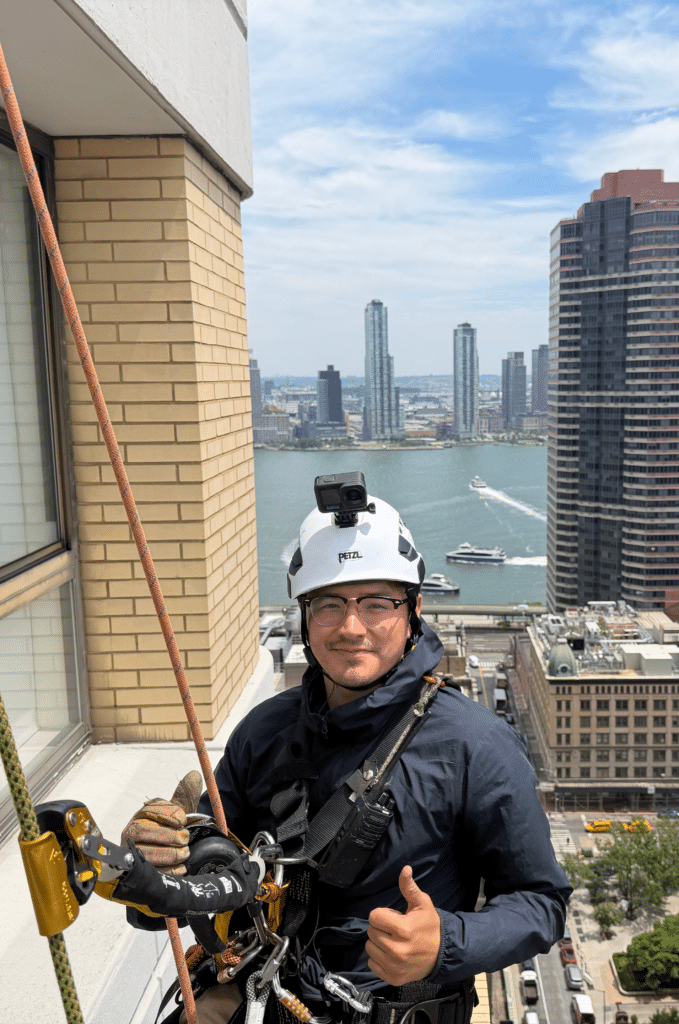
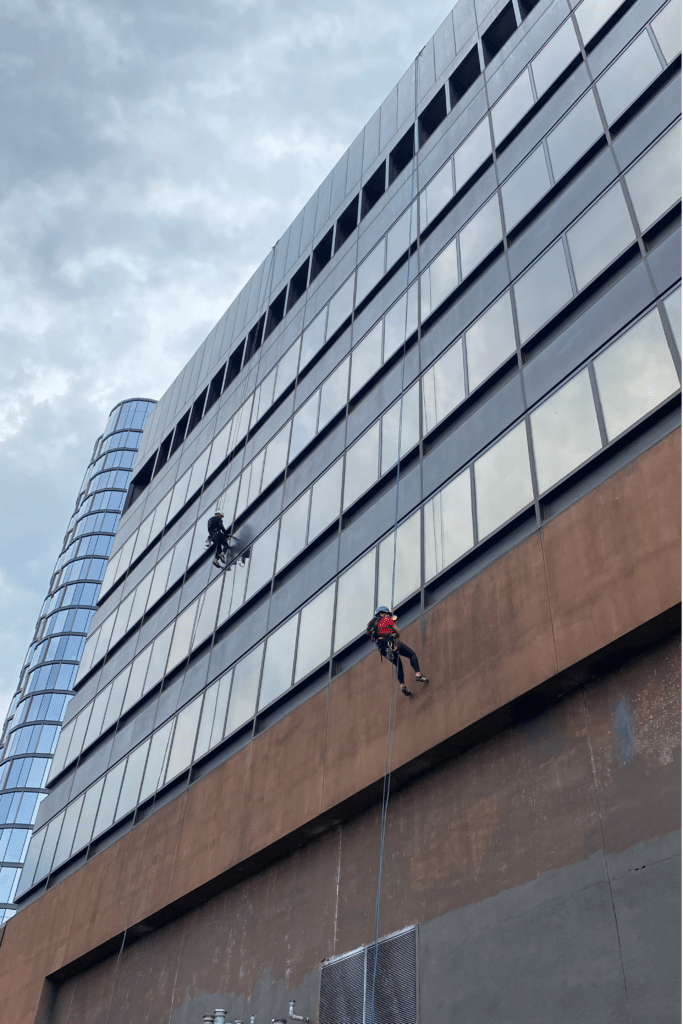
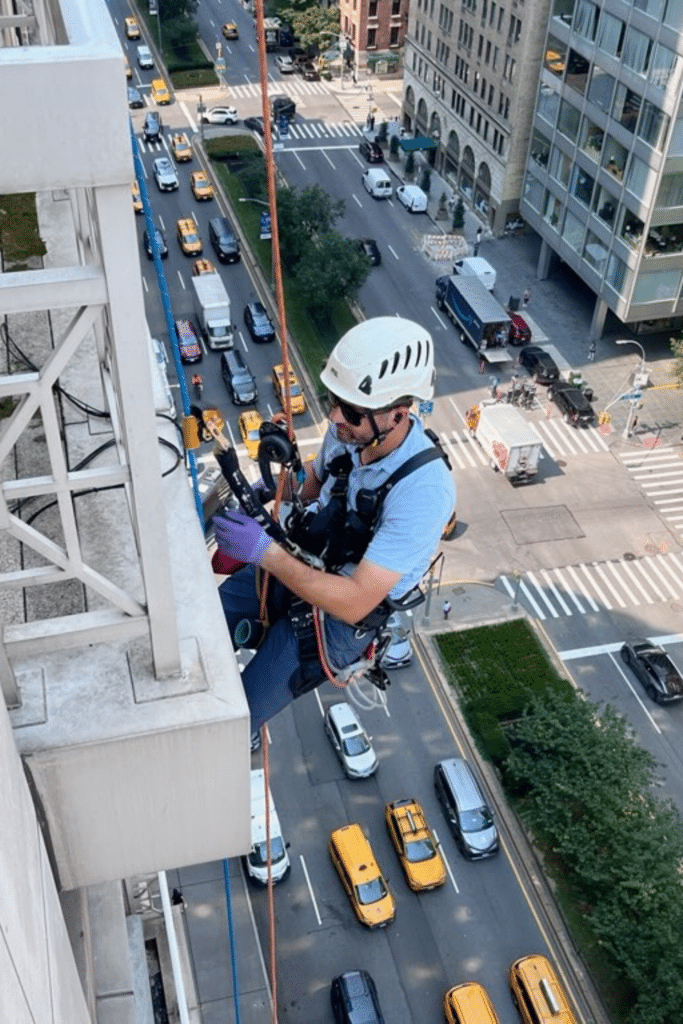
The inspection takes days; arranging access can take weeks. Sheds, scaffolds, permits, tenant complaints, the setup often creates more cost and disruption than the examination itself. Rope access cuts through all of it. Our Society of Professional Rope Access Technicians (SPRAT)-Certified Rope Access Consultants perform safe, up-close inspections with same-day mobilization and faster turnaround, delivering:
- Lower overall access costs
- Less disruption to tenants and street-level operations
- Faster mobilization and turnaround
- A quicker path from inspection findings to filing decisions
The same code-required close-up examination with less time, less cost, and less friction.
Rimkus SPRAT-certified Technicians
Mike Lopez, R.A., QEWI
Technical Director, Architectural Engineering
Andrew Cucciniello, R.A., QEWI
Principal Consultant

Alafia Akhtar
Senior Consultant

Elyse M. Marks
Senior Consultant


Rimkus can help property managers reduce costs and avoid unnecessary penalties. Owners who missed their Cycle 9 filing (No Report Filed status) can stop penalties from accruing by filing their Cycle 10 report early through a Sub-Cycle Override Request in DOB NOW: Safety. Penalties already accrued must still be paid for the filing to be accepted, though the DOB may waive civil penalties in limited circumstances under 1 RCNY 103-04.
FISP Cycle 10: What Building Owners Need to Know
FISP requires the exterior walls of all NYC buildings greater than six stories to be inspected by a Qualified Exterior Wall Inspector (QEWI) — a New York State licensed PE or RA on the DOB’s approved list — with a technical report filed electronically through DOB NOW: Safety.
Inspections follow three staggered two-year sub-cycles based on the last digit of the building’s block number (look yours up through ACRIS or the BIS portal). Critical examinations combine a comprehensive visual inspection with physical inspections at least every 60 feet on walls facing a public right of way; cavity wall construction requires investigative probes on alternating cycles.
Facade Classifications
Safe
- No hazardous conditions observed
- No further action required until next cycle
Safe With a Repair and Maintenance Program (SWARMP)
- Conditions observed that require repair before the next inspection cycle
- A recommended repair date must be included in the report
Unsafe
- Conditions posing immediate danger to public safety
- Requires urgent repairs and protective measures (such as sidewalk sheds)
- SWARMP conditions from the previous cycle that remain unrepaired typically default to Unsafe status
Penalties for FISP Non-Compliance
- Late filing of initial report: $1,000 per month (calculated retroactively from deadline)
- Failure to file: $5,000 per year
- Unsafe facade conditions: ECB base penalty of $5,000; maximum penalty up to $25,000 under NYC Rules Section 102-01
- Failure to install sidewalk shed when required: Additional penalties and potential DOB enforcement action
- Annual parapet inspection failure: $1,250 minimum; $10,000 maximum
Avoid $25,000 in ECB Penalties
Thousands of NYC buildings compete for a limited pool of qualified inspectors during each FISP cycle. Early engagement within your assigned sub-cycle window reduces scheduling conflicts and helps secure qualified professionals before demand peaks near deadlines.
Rimkus’ licensed QEWIs file directly through DOB NOW: Safety and handle inspection, reporting, and remediation design in one engagement. Sub-Cycle A buildings have until February 21, 2027, but qualified inspectors book out fast as the deadline nears.
Request a FISP Consultation Today
Frequently Asked Questions
Need Help? Contact Rimkus
FISP Cycle 10 is underway, and Sub-Cycle A buildings must file by February 21, 2027. Don’t wait until demand peaks near the deadline — schedule your inspection now to avoid scheduling conflicts and late-filing penalties.
Schedule a Consultation
- Phone: +1 646 755 9259
- Toll free: +1 800 580 3228
- Email: [email protected]
Office Address
229 West 28th Street, 9th Floor
New York, New York 10001, United States
Meet Our New York Team
Additional Insights on New York Regulations
Related Rimkus Articles
- History of Local Law 11
- New York City Update on Use of Uncrewed Aircraft
- Parking Garage Inspections: New York City Rule 103-13
- The Importance of Self-Reporting for New York City’s FISP
- Balcony Railing Code Requirement NYC
- New York City Parapet Inspections
- The Benefits of High-Efficiency Window Replacement
External Resources
Related Rimkus Case Studies
- From UNSAFE Citation to Active Restoration: Managing a Complex Facade Campaign on a Historic Institutional Building
- Investigative Repair and Full FISP Compliance: A Brooklyn Residential Facade Restoration Story
- End-to-End FISP Compliance: A Manhattan Residential Building’s Path from SWARMP to Close-Out
- SoHo Landmark Facade Restoration: LPC Closeout in the Cast Iron Historic District
- Facade Restoration for a Manhattan High-Rise Residential Building